









Schedule

13–14 November 2026, UWA Business School, Crawley. Two days of talks on one track, plus a hands-on workshop on Friday. Times may shift slightly before the day.

Friday
13 November

Hardware and exploitation

  1. Welcome and opening

  2. AC/DC/RCE: From Bluetooth to Contactor

    Brendan Scarvell

    Hardware hacking

    Abstract and bioHide details

    Abstract

    A full-stack teardown of a commercial EV charger, from default credentials in the installation guide through to unauthenticated control of the AC power contactors.

    This research covers multiple pre-auth RCE vulnerabilities including a Bluetooth attack requiring no network access, an unauthenticated manufacturing test mode that bypasses every safety interlock on the charger, and a design flaw that puts all safety mechanisms in a single Linux process with no independent hardware verification.

    The affected firmware platform is used by multiple resellers globally. A single broadcast UDP packet can disable ground fault protection across an entire fleet.

    Speaker

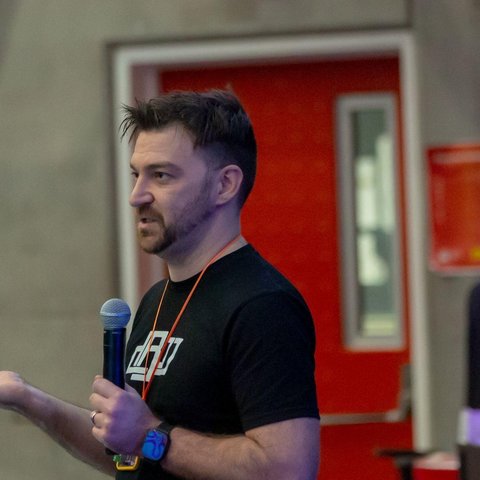
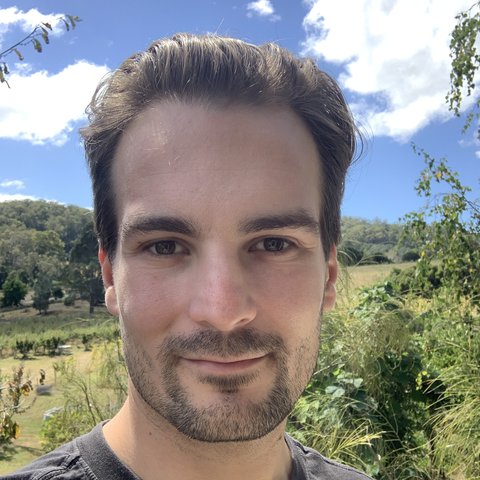
    Headshot of Brendan Scarvell

    Brendan Scarvell

    Brendan is a security researcher and co-founder of Signal 11, with a background spanning web application, network, hardware, and embedded device security. His work focuses on finding and exploiting vulnerabilities in real-world systems, with a particular interest in connected devices and the security risks created when consumer and business infrastructure overlap.

  3. I Built a Tiny Passkey Authenticator, Then Had to Explain Why You Shouldn’t Trust It

    George Coldham

    Identity and hardware security

    Abstract and bioHide details

    Abstract

    Passkeys promise a cleaner future: no shared secrets, less phishing, and fewer humans being blamed for typing passwords into convincing nonsense. But what actually makes a passkey secure?

    In this talk, I’ll use a small FIDO2 authenticator built on cheap microcontroller hardware to explore what is actually happening when a passkey is created and used. I’ll show the project, explain how it was put together, and use it as a practical way to examine where trust really lives in a passkey authenticator. Because a device can work perfectly and still be a terrible place to put your trust.

    We’ll look at the security boundaries around private key storage, firmware, physical access, hardware, supply chain and the assumptions we make about the authenticator itself. Because “phishing resistant” does not mean “magically secure”. Attendees will leave with a practical mental model for how passkeys work, why they resist phishing, and where the remaining security boundaries sit.

    For anyone who wants to build one themselves, I’ll provide the project resources and hardware details afterwards.

    Speaker

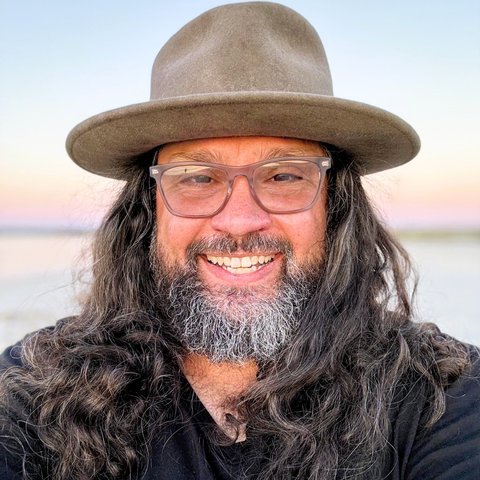
    Headshot of George Coldham

    George Coldham

    George Coldham is a Cloud Solution Architect in Security at Microsoft, based in Perth, Western Australia. He works with organisations on cloud security, identity, Zero Trust, securing AI systems, using AI for security, and practical security architecture.

    He is also the founder of the Global Security Community and an organiser of the Perth Microsoft Security Meetup and Global Security Bootcamp Perth. He regularly speaks about security topics that sit between enterprise reality and hands-on experimentation. His recent work has focused on passkeys, phishing resistance, browser security, agentic systems, and how security controls actually behave once humans and legacy assumptions get involved.

    George enjoys turning abstract security ideas into practical demonstrations, preferably with small devices, live demos, and just enough questionable hardware decisions to make the lessons memorable.

  4. Morning tea

  5. Go Foot, Meet Gun: Auditing the Go Ecosystem for Its Sharpest Edges

    Zoltan Madarassy & Alex Brown (elttam)

    Code review

    Abstract and bioHide details

    Abstract

    Go is pretty safe by default — mostly — which is exactly why the subtler problems go unnoticed. This talk picks up where our two-part Golang code review notes blog posts left off, hunting for the footguns that slip past code review, the compiler, and your linter alike. We’ll walk through representative examples from each part of the blog series — such as ReverseProxy dropping auth headers when an attacker sets the right Connection value, and silent integer overflows that only misbehave on certain architectures — before turning to the broader set of standard-library and web-layer pitfalls the rules cover.

    We will then talk about how we used the Semgrep rules made during this research across a large slice of the most popular open-source Go projects on GitHub — the libraries and infrastructure much of the software supply chain quietly depends on. You’ll hear how the rules were written and tuned to survive real codebases, which footguns turned out to be widespread versus genuinely rare, and what that says about the gap between the language getting safer and anyone actually adopting the safer patterns. You’ll leave with the rules, the method to run them against your own dependencies, and a sharper eye for the Go patterns worth auditing by hand.

    Speakers

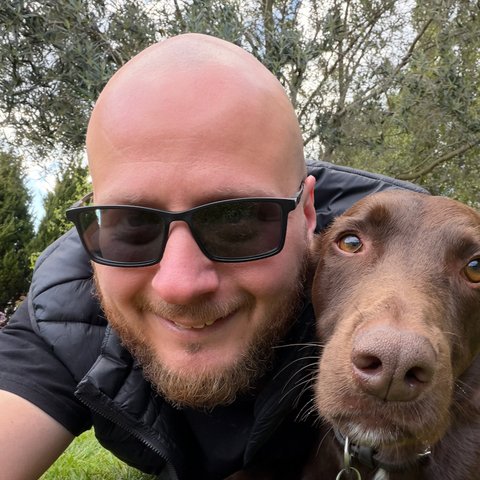
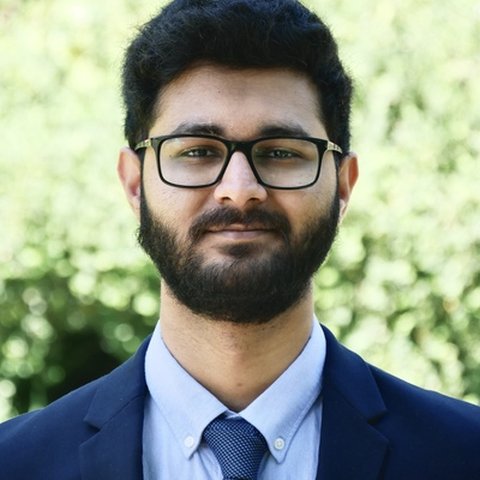
    Headshot of Zoltan Madarassy

    Zoltan Madarassy

    Zoltan is a Principal Security Consultant at elttam with 15 years of experience. He enjoys auditing complex products and loves going down rabbit holes, hunting for the weirdnesses and quirks of languages and frameworks.

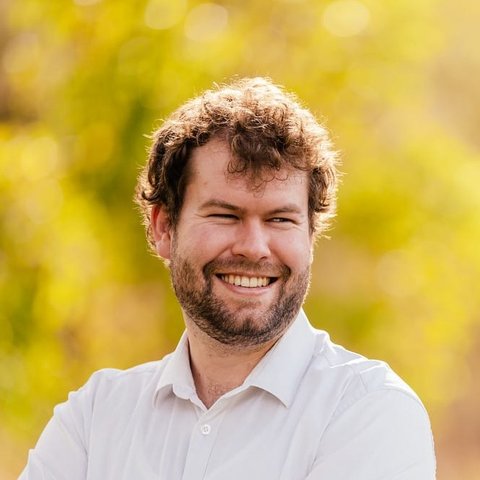
    Headshot of Alex Brown

    Alex Brown

    Alex Brown is a Senior Security Consultant at elttam who specialises in code-assisted security assessments. He loves finding weird quirks within languages and frameworks that can be leveraged to exploit novel and interesting vulnerabilities in applications. Alex is also an organiser of DownUnderCTF, the largest Australian CTF event, where he creates fun and interesting challenges that boggle competitors' minds. His recent research into database query issues beyond the well-known injection vulnerability classes has uncovered previously overlooked vulnerabilities, culminating in his work on the ORM Leaks vulnerability class. He presented this research at Black Hat EU 2025, and his article “ORM Leaking More Than You Joined For” was ranked 2nd in PortSwigger’s Top 10 Web Hacking Techniques of 2025.

  6. Springing Cats Together: Chaining Intended Behaviours into RCE

    Chris Elliott

    Red teaming and exploitation

    Abstract and bioHide details

    Abstract

    You land on a Spring Boot Admin console managing hundreds of containers. The environment is heavily restricted: there is no file upload functionality, no writable web root, no log poisoning opportunities, and zero usable CVEs. So, how do you get a shell?

    This technical walkthrough dives deep into the internals of Java Spring and Tomcat to explore what happens when you are forced to rely entirely on first-principles thinking. Instead of hunting for traditional memory corruption bugs, this talk breaks down how these servers operate by design.

    By dissecting a highly predictable behavior in Tomcat’s internal mechanics and chaining it with exposed Jolokia JMX endpoints, we will explore how to turn expected server state into exploit primitives. Join this session to see how a perfectly timed race condition can weave intended features together into a reliable path for Remote Code Execution.

    Speaker

    Headshot of Chris Elliott

    Chris Elliott

    Chris Elliott is a Perth-based principal red teamer and offensive security researcher with a passion for finding unconventional ways to break things. His work spans adversary emulation, exploit development and vulnerability research, including discoveries affecting widely used enterprise software.

    He’s particularly interested in how seemingly harmless, intended functionality can be chained together to produce unexpected security outcomes. Outside of security engagements, Chris is a keen tinkerer who enjoys pulling things apart, figuring out how they work, and finding creative ways to improve or repurpose them. His interests span everything from software and electronics to cars and audio equipment.

  7. Lunch

  8. Dumpster Diving for AI Agent Data Leaks

    Alexander Wilczek

    AI data leaks

    Abstract and bioHide details

    Abstract

    OpenClaw is the most popular AI agent framework of the year, with 390,000 GitHub stars. Install it, hand it your API keys, OAuth tokens, database credentials and private keys, and a single agent will run your email, calendars, shells, cloud accounts, messaging and payment tools for you. That is the appeal, and that is the problem. These agents only work well when they are over-privileged, so users grant everything and least privilege quietly disappears. Adoption was viral. Security was an afterthought.

    Early 2026 showed what that costs. ClawHavoc pushed over a thousand malicious skills into the OpenClaw marketplace, and an exposed Moltbook database leaked roughly 1.5 million API keys. The response focused on scanning skills before publication. Nobody was asking where the stolen data was ending up, so I went looking. To date I’ve identified close to 3,000 leaked secrets across nearly 1,400 breaches.

    The biggest pattern is OpenClaw leaking itself: Firebase and GCP keys embedded in agent JSON configs, gateway tokens committed as environment variables, session logs pushed to version control with auth tokens still intact, and SOUL.md personality files exposing the agent’s system prompt with credentials baked straight in. And because an agent never leaks just the AI parts of an .env file, everything else comes with it: AWS IAM keys, live Stripe keys, GitHub PATs, database connection strings, SSH private keys. On the exfil side I’ll cover Telegram bot exfiltration with the bot token embedded in the skill, a long tail of drop services, and hardcoded C2 ranges.

    Once the find rate held up I built BreachClaw, a free live hunter anyone can use to check their own exposure by email or by SHA-256 hashed secret. I’ll walk through what it has found so far, which types of keys leak most, and run a short live demo.

    I’ll close on reinstating least privilege. Agents need broad access to be useful, for now, so the practical move is to automate the things where a breach wouldn’t be catastrophic, treat every privilege you grant as a breach waiting to happen, stick to official skills, rotate credentials, and monitor the output side so you find out when something leaks rather than when someone uses it.

    Speaker

    Headshot of Alexander Wilczek

    Alexander Wilczek

    I’m a digital nomad fighting cybercrime. I’ve been travelling Australia (and the world) full time for over three years in my Land Cruiser and hacking the planet from the most pristine beaches to the most remote parts of the outback. I specialise in dark web, data leaks and cybercrime. I’ve presented my research at DEF CON and multiple BSides events. I’m also the proud founder of Rivanorth.

  9. Talk to be announced

    We’ll confirm this session shortly.

  10. The Ghosts of Protocols Past: What Path Dependency Teaches Us About Cyber Security

    Danielle Rosenfeld-Lovell

    History and critical reasoning

    Abstract and bioHide details

    Abstract

    In this talk, Danielle will introduce the concept of path dependence in a technology setting. Using three examples of network protocols (BGP, ARP, and Spanning Tree Protocol) that have shaped and constrained later network capabilities and introduced significant challenges to securing networks, she will explain why path dependence can be useful as a lens for understanding how legacy technologies cause many of the security issues of today. The audience will be encouraged to reflect on how they can think critically to reduce the impact of their present assumptions on the security posture of technologies being developed using several key questions.

    Speaker

    Headshot of Danielle Rosenfeld-Lovell

    Danielle Rosenfeld-Lovell

    Danielle has worn many professional hats over her working life including customer service, telemarketing phone operator, dental nurse, research assistant, registered nurse in paediatrics but more recently (and relevantly) penetration tester/application security engineer. She tends to enjoy working on problems with an application security lean and enjoys thinking about the intersection of technology, history, and ethics. In her spare time she struggles to keep up too many hobbies including baking, hiking, knitting, singing in choirs, and being an overinvolved pet owner.

  11. Viral Vulnerabilities: Unpacking Copy.Fail and related Linux Kernel bugs

    Angus

    Linux kernel and vuln research

    Abstract and bioHide details

    Abstract

    Remember Copy.Fail (CVE-2026-31431), the Linux Kernel vulnerability that went viral earlier this year? If you missed it, here’s all you need to know: it was a local privilege escalation bug found by researchers at Theori; for the past 10 years, almost every kernel from every major distro was vulnerable; the bug was exploitable with a 732-byte Python script with 100% reliability; and over the weeks following disclosure, numerous variants were found. Of course, online discourse was fuelled by the fact that it was one of the first critical Linux kernel bugs found using AI.

    In this talk, I’ll break down what the Copy.Fail bug is, how it was exploited, discuss the variant vulnerabilities, and give my thoughts on the future of this bug class in general. The hype cycle may have now passed, but I think it’s still a very interesting bug, and taking the time to understand it properly can lead to interesting insights.

    Never looked at the Linux kernel before? Don’t worry – there is absolutely no code in this talk. I’ll be explaining all of the core concepts from the ground up, and every slide is filled with hand-drawn diagrams to help you understand what’s going on.

    Speaker

    Headshot of Angus

    Angus

    Angus is a vulnerability researcher at InfoSect. At work, he is known for falling down rabbit holes and giving talks with unnecessary amounts of detail. Outside of work, Angus enjoys learning new (usually useless) skills, attempting (and forever failing) to win CTFs, cooking (hopefully) tasty food, and is known to be overly competitive when playing (video|board|role-playing|war)games with his friends.

  12. AI Security Q&A with Cole Cornford

    Cole Cornford

    AI security

    Abstract and bioHide details

    Abstract

    A short presentation to set the stage on AI security, followed by audience Q&A.

    Speaker

    Headshot of Cole Cornford

    Cole Cornford

    Cole has led product security functions since 2015 across government, finance, and tech businesses. He founded Galah Cyber in 2021 and has provided security consulting and advisory services since then. Recently his focus has been on helping establish awareness and sovereign capability around artificial intelligence. Cole is the father of two daughters who think “fluffy duck” is a more appropriate job title than “founding feather” due to bad bed hair.

  13. Day 1 wrap-up

Saturday
14 November

Threat intel, defence and AI

  1. Day 2 opening

  2. Who is Igor Gilmutdinov? Using OSINT to uncover the people behind Russian bulletproof hosting providers

    Rich S

    OSINT and threat intelligence

    Abstract and bioHide details

    Abstract

    This presentation will dive into the murky world of corporate shell companies, tax havens and the lengths companies will go to, to hide their true identities from their customers and appear legit. During this investigation the same name would continue to appear: Igor Gilmutdinov… but who is he?

    Speaker

    Headshot of Rich S

    Rich S

    Rich is an OSINT analyst from Perth who has been doing OSINT since before it became a thing.

  3. Nobody’s Protocol: Attacking TACACS+ in 2026

    Matt Jones (elttam)

    Network and vuln research

    Abstract and bioHide details

    Abstract

    TACACS+ is 42 years old and almost nobody thinks about it, yet it is still how most telcos, ISPs and large enterprises authenticate admin logins across every router, switch and firewall they own. Last year’s CISA advisory on Salt Typhoon has them harvesting credentials straight off TACACS+ servers. This talk covers a pre-authentication format string vulnerability that sat for 25 years in the daemon behind a large share of those deployments, giving code execution as root, along with the trick that recovers the shared key first so you can get there without credentials.

    The rest is a case study in how software security works for critical services in 2026. The bug class was solved in 2001 and compilers have caught it for 20 years, none of which helps when nobody owns the code. Getting a fix out took several months of disclosure, across an archived project at Meta, a vendor who wasn’t answering, and Cisco PSIRT confirming the code hadn’t been theirs for decades.

    Speaker

    Headshot of Matt Jones

    Matt Jones

    Matt Jones is a co-founder of elttam.

  4. Morning tea

  5. Purple Teaming yo ICS

    Bruce ‘BFL’ Large

    Purple teaming and OT

    Abstract and bioHide details

    Abstract

    In this presentation Bruce will outline the case for why Critical Infrastructure operators need to do purple teaming to ensure they are defensibly managing cyber security risks for their Operational Technology (OT).

    This presentation will start with a primer on purple teaming and walk through how critical asset operators should develop purple team assessments for their OT systems. This presentation will discuss methods to gather relevant Cyber Threat Intelligence to inform their assessments. Critically for asset operators this presentation will discuss why purple teaming needs to happen in a representative test lab environment initially to give teams confidence in their assessments. The presentation will discuss useful tools and techniques to support asset operators plan and execute their purple team assessment and finally Bruce will discuss how he built his home lab to support this presentation.

    Speaker

    Headshot of Bruce ‘BFL’ Large

    Bruce ‘BFL’ Large

    Bruce has 20 years experience working with IT and Operational Technology in network, telecommunications and system engineering roles. Bruce has worked in Electricity Generation & Transmission, Railway, Aviation, Emergency Services and Consulting industries. Bruce is the Founder and Principal Cyber Security Architect at BLARGE.

    He is a Chartered Professional Engineer, Registered Professional Engineer of Queensland, Foundation Chartered SABSA Architect (SCF). He is an ISA/IEC 62443 Expert and has attended Industrial Control Systems (ICS) Cyber Security training at QUT. Bruce holds the GIAC GICSP, GRID, GSOM and CCTI certifications.

  6. Lunch

  7. A Leukocyte For Supply Chain Attacks

    Adam Brickhill

    Tooling

    Abstract and bioHide details

    Abstract

    Research and development into preventing supply chain attacks for all developers, which resulted in creating a tool that can prevent the installation of likely poisoned packages.

    Speaker

    Headshot of Adam Brickhill

    Adam Brickhill

    Adam is a cybersecurity graduate from Edith Cowan University who found his passion at the intersection of security and software development. After completing his internship at Seamless Intelligence, he joined the team full-time, spending the last five years building bespoke tools that assist the Security Operations Centre’s daily operations.

  8. The enemy within: running untrusted code through AI workloads

    Kumar Soorya & Kaif Ahsan

    AI security

    Abstract and bioHide details

    Abstract

    AI agents are no longer just generating text; they’re writing code, executing it, installing dependencies, calling APIs, and operating inside your infrastructure with varying degrees of autonomy. Products like coding assistants, autonomous dev agents, and tool-calling LLMs need to run untrusted, dynamically generated code as a core part of their functionality.

    The AI workloads being non-deterministic means the user can manipulate the underlying system more easily and achieve a greater impact. Hence, it demands a fundamentally different approach to isolation.

    And when we think of isolation, the first thing that comes up is sandboxing. But the word “sandbox” is doing a dangerous amount of heavy lifting, and it hides an enormous amount of complexity. How does one properly “sandbox” an AI-native workload? What are the common trade-offs, mistakes and architectural best practices?

    This talk is a practitioner’s guide to getting sandboxing right for AI workloads, built from our experience building & securing AI products at Atlassian.

    We’ll do a practical walkthrough of building a AI sandbox: what are the major isolation layers, explain what the trust boundary actually is, showcase how we evaluated and selected solutions at each layer for our AI products, and then drive the point home with mock vulnerabilities representative of real bugs we’ve seen in the industry, while building our own products.

    You’ll see how a security & engineering team actually reasons through the complex challenges of sandboxing a non-deterministic workload. We’ll share the trade-offs we hit, the assumptions that broke, the actual vulnerabilities they caused, and the architectural decisions that survived contact with reality. So gather along and come hear our tale.

    Speakers

    Headshot of Kumar Soorya

    Kumar Soorya

    Kumar Soorya is a Product Security Engineer, where he works with his team to aid internal customers with evaluating and providing guidance from an infrastructure and platform security standpoint. Prior to his current role, Soorya has worked as a security engineer for AWS assisting with incident response for internal services as a part of the shared responsibility model. Soorya is passionate about making knowledge about security accessible to security leaders, practitioners and students. He is one of the co-hosts of the Everything Cyber podcast, where he shares hands-on and conversational videos on tech and cybersecurity.

    Headshot of Kaif Ahsan

    Kaif Ahsan

    Kaif Ahsan is a coder by passion and a hacker by profession. He started his journey in tech as a Software Engineer but soon fell in love with the art of breaking software. His knowledge of development and cybersecurity has naturally led him to the Application Security space, where he currently works as a Product Security Engineer at Atlassian. Kaif is a big proponent of education and open access to knowledge. He regularly volunteers to run cybersecurity workshops at various universities as well as giving talks at local meet-ups and conferences. He is also the co-host of YT channel, Everything Cyber, where he shares hands-on and conversational videos on tech and cybersecurity. His videos target intermediate-level professionals and help them gain expertise through practical content.

  9. A Fool’s Paradise: AI vs Humans

    PS Sides: Zoe, Hugo, Binal & Orin

    Social engineering and AI

    Abstract and bioHide details

    Abstract

    Fooling people through lies, scams, and manipulation are at the heart of many cyber attacks. A team of Year 6 (11 and 12 year old) students uncover what it means to be fooled, share our findings on fooling humans vs AI, and unpack the hypothesis that kids today are more likely to be fooled by technology than any generation previous. You’ll leave with an understanding of what we believe kids need to learn and some inspiration for future solutions.

    The PS Sides team, Zoe, Hugo, Binal and Orin, standing with their arms raised in BSides Perth t-shirts

    Speaker

    PS Sides: Zoe, Hugo, Binal & Orin

    They’re four friends, aged 11 and 12, from a primary school in Perth. They’re curious, creative, and always up for trying something new. Like most kids their age, their interests stretch in all different directions – they’re even busy working together on their first movie. For the first time, they’re stepping onto a conference stage together, having chosen to challenge themselves by learning about cyber security. They might see things a little differently from the usual BSides Perth speaker, and that’s exactly the point: the digital world that you are designing, securing and building today is the one they’re growing up in, and so it’s a world where their views matter.

  10. Closing ceremony, prizes and CTF results

Friday
13 November

Workshop

Running alongside the Friday talks. Places are limited.

The Art of Practical Threat Modelling

Ralph Andalis

A full-day, hands-on training in practical application threat modelling. Separate paid ticket, limited to 30 places. You don’t need a BSides ticket to attend.

Price

  • $150 AUD + GST (regular admission)

What’s included

  • 8-hours full day hands-on training
  • Training materials (slides and practice materials)

Prerequisites

  • Know the Threat Modelling basics
  • Understand security issues and threats on software systems, applications and networks
  • Ideally knows at least STRIDE & DREAD and its basics

Trainer
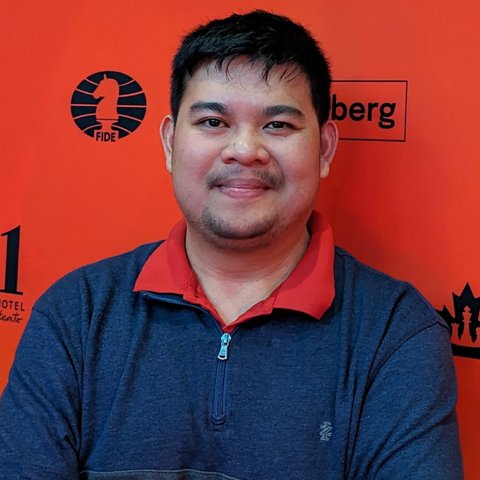
Headshot of Ralph Andalis

Ralph Andalis

Ralph is the Director of Security & Founder of Gridlock Security (GridlockSec), a company that focuses on cybersecurity consulting services. He has 11 years experience in the industry as a Security Consultant/Pentester/Security Researcher. His expertise is mainly Web, Mobile, and Network Pentesting, Threat Modelling, Security Architecture Review, and Security Design Reviews. He recently worked at Microsoft as a Senior Security Engineer handling solely the product security of his assigned product for all his 130+ Software Engineers.

He is also a major active contributor and a member of the working group for the OWASP Application Security Verification Standard (ASVS) project, making the standard better for fellow pentesters and developers alike. Recently, he started helping on OWASP Artificial Intelligence Security Verification Standard (AISVS) to help address the AI-security needs of the global community and open-source standards.

He trained attendees at BSides Vancouver 2025, BSides Orlando 2025, BSides Luxembourg 2026, OWASP AppSec New Zealand Days 2026 for similar earlier versions of Threat Modelling Trainings which had been well received. He has presented his talk as well on OWASP AppSec Pacific Northwest conference (PNW) 2024 in Vancouver, BC Canada and HackStop Cybersecurity Summit 2024 in Ljubljana, Slovenia.

Book a workshop place

Tap any talk for its abstract and speaker bio. Questions? Email [email protected].